
ESTATE JOURNAL
The Cost of Over-Maintaining a Coastal Home

A more thoughtful approach to coastal home care balances preventative maintenance with condition-based oversight—protecting the residence without creating unnecessary expense.
By Elle Flannery | Coastal Peace of Mind ou may be spending more to care for your coastal home than the home actually needs.

Owning a home along the coast comes with a unique set of maintenance demands. Salt air, moisture, marine exposure, sun, wind and fluctuating humidity can all accelerate wear on materials that might perform very differently just a few miles inland. Because of that, coastal homeowners are often told that the answer is simple: more preventative maintenance.
More treatments. More polishing. More sealing. More scheduled service. More recurring vendor visits.
But more is not always better.
In fact, one of the most overlooked aspects of thoughtful estate care is knowing what truly requires preventative attention, what simply needs to be monitored, and what can safely be handled on an as-needed basis. That distinction can have a significant impact on both the condition of a residence and the cost of maintaining it over time.
Preventative Maintenance Has a Place
There are absolutely areas of a coastal home where preventative maintenance is essential. HVAC systems need regular servicing. Roofs and drainage systems should be inspected. Exterior metals exposed to marine air may require ongoing care. Certain natural stones, woods, specialty finishes and mechanical systems benefit from routine attention before deterioration becomes visible.
Preventative care can extend the life of materials, protect warranties and reduce the likelihood of expensive emergency repairs. The problem arises when everything is placed on a recurring preventative schedule simply because it can be.
A homeowner can quickly find themselves with a calendar filled with monthly, quarterly and semiannual service appointments, each one carrying a cost and often addressing something that may not actually require attention yet. Across a large residence, those appointments can become surprisingly expensive.
The Difference Between Preventative and Condition-Based Care
A well-managed residence should not operate entirely on autopilot. It should be observed.
Condition-based care means evaluating the actual state of the home and intervening when necessary rather than automatically performing the same service at predetermined intervals. An exterior metal fixture, for example, may need polishing every few months in one location but remain in excellent condition much longer in another because of differences in exposure, finish, orientation and protection from the elements.
The same can be true of natural stone, woodwork, exterior furnishings, specialty hardware and certain finishes. These materials may benefit from being monitored regularly and treated only when early signs of wear begin to appear.
The goal is not to delay necessary maintenance. It is to avoid performing unnecessary maintenance.
That sounds like a small distinction, but across a large residence with numerous specialty materials, vendors and systems, the financial difference can be substantial.
More Service Does Not Always Mean Better Preservation
There is also a misconception that frequently servicing a material automatically protects it. In some cases, it can do the opposite.
Over-polishing, over-cleaning, excessive chemical use or repeated treatment with the wrong products can gradually alter a finish or shorten the life of a material. Natural stone can become etched or dulled by inappropriate cleaners. Specialty metals can lose their intended patina. Wood can be damaged by excessive moisture or incompatible products. High-end fabrics and furnishings may deteriorate faster when cleaned more frequently than necessary.
Luxury homes often contain materials that were specifically chosen for the way they age, so preservation should respect that. The objective is not always to make every surface look permanently new. In some cases, the appropriate goal is to allow a material to age beautifully while preventing actual deterioration.
That requires judgment.
Coastal Exposure Is Not Uniform
Even within the same neighborhood, two homes can have very different maintenance needs. A residence directly facing the ocean may experience significantly more salt accumulation than one several streets inland. One side of a property may receive intense afternoon sun while another remains shaded and retains moisture. Balconies, railings, windows, exterior hardware and furnishings exposed to prevailing winds may deteriorate more quickly than identical materials elsewhere on the property.
This is why generic maintenance schedules can be inefficient. The residence itself should determine the schedule.
An experienced eye can identify which areas are beginning to show wear, which are performing well and which require more frequent attention because of their location or material composition.
Observation Is One of the Most Valuable Forms of Maintenance
Some of the best preventative care does not involve a vendor at all. It involves consistent observation.
A small rust spot, a change in grout coloration, a slow drain, a new crack in exterior stucco, an irrigation issue, moisture around a window, a door beginning to stick, a change in water pressure or an appliance that suddenly sounds different may not require an immediate service call. But those changes should be noticed, documented and monitored before they become larger problems.
This is where regular estate oversight becomes especially valuable. When someone is consistently familiar with a residence, subtle changes are easier to recognize. Instead of scheduling every possible service in advance, the home can be monitored and maintenance can be initiated based on what is actually occurring.
The Cost of Vendor-Driven Maintenance
Another challenge homeowners face is that vendors naturally view the home through the lens of their own specialty. A stone professional may recommend regular stone maintenance. A metal specialist may recommend polishing. A window company may suggest recurring service. A landscaper may identify additional treatments.
Individually, each recommendation may be reasonable. Collectively, they can create an extremely expensive maintenance program.
The homeowner is then left trying to determine what is genuinely necessary, what is beneficial but optional and what can wait. That can be difficult when every recommendation comes from a specialist who, understandably, is focused on protecting the specific material or system they service.
This is one reason independent oversight can be so valuable. Someone looking at the residence as a whole can help prioritize recommendations based on condition, risk, cost and actual need rather than simply following every suggested maintenance interval.
A Better Question: What Happens If We Wait?
One of the most useful questions to ask before approving recurring maintenance is:
What happens if we do not do this right now?
If postponing a service could create water intrusion, mechanical failure, permanent material damage or a safety issue, preventative intervention is usually justified. If the consequence is simply that a surface may eventually begin to look slightly less polished, monitoring may be the more appropriate approach.
The urgency of the consequence should help determine the urgency of the maintenance.
That does not mean waiting until something fails. It means understanding the difference between preservation, appearance and risk.
High-Value Areas Where Prevention Matters Most
While every residence is different, some categories generally deserve a more proactive approach.
Water and Moisture
Water intrusion can become expensive very quickly. Roofs, flashing, drainage systems, exterior sealants, windows, plumbing connections, irrigation and any area with a history of moisture should be watched carefully. A minor leak caught early is very different from discovering prolonged water damage after a residence has been vacant for several months.
Mechanical Systems
HVAC, pool equipment, water heaters, pumps, generators and other mechanical systems generally benefit from scheduled servicing. These are systems where failure can create significant inconvenience or secondary damage.
Exterior Materials Exposed to Marine Air
Certain metals, hardware and finishes deteriorate rapidly in salt-heavy environments. The appropriate maintenance schedule depends heavily on the material and the property's exposure.
Drainage and Landscaping
Improper drainage, irrigation leaks and overwatering can cause damage that extends far beyond the landscape itself. These systems deserve regular observation, particularly around foundations, walls and hardscape.
Specialty Materials
Natural stone, custom woodwork, specialty metals and unique finishes should be cared for according to the material, manufacturer recommendations and actual condition rather than generic cleaning schedules.
Where As-Needed Care Often Makes More Sense
Other areas of the residence may be better suited to condition-based maintenance. Decorative metal polishing, certain deep-cleaning services, furniture treatments, specialty surface restoration and some cosmetic exterior services may not need to occur simply because a set number of months have passed.
If the material is performing well, there may be little benefit in servicing it prematurely. Regular residence checks can instead identify the early signs that care is becoming necessary, allowing the homeowner to spend money when it creates an actual benefit.
Seasonal and Vacant Homes Require a Different Approach
Second homes and seasonal residences introduce another layer of complexity. A home that sits largely unused may experience less wear from daily living but greater risk from unnoticed problems. In these residences, monitoring can be more important than frequent servicing.
A plumbing leak in a primary residence may be noticed within hours. In a second home, it could continue for weeks. An HVAC issue, power interruption, appliance malfunction or irrigation problem may also go unnoticed until the homeowner returns.
For these properties, the most valuable investment may not be an ever-expanding preventative maintenance schedule. It may be consistent oversight by someone who knows what normal looks like inside the residence.
Preventative Care Should Be Strategic, Not Automatic
The best estate-care programs are not built around doing the maximum amount of maintenance possible. They are built around protecting the residence intelligently.
That means asking what the actual condition of the material or system is, what the risk of waiting may be, whether the service protects the asset or simply improves appearance, whether the recommended frequency is appropriate for that specific home and whether the condition has actually changed since the last service.
Those questions create a more thoughtful maintenance strategy and help direct resources toward the areas that genuinely matter.
The Role of an Estate Manager
One of the most valuable functions of private estate management is not simply arranging vendors.
It is knowing when a vendor is actually needed.
A good estate manager should help homeowners prioritize maintenance, document conditions, coordinate specialists when appropriate and question recommendations when the value is unclear. The objective should never be to create more work around the residence. It should be to protect the home while reducing unnecessary complexity and expense for the homeowner.
Sometimes that means scheduling preventative service months in advance. Other times it means documenting an issue, watching it and deciding that no action is necessary yet. Both can be examples of good estate management.
Preservation Without Over-Maintenance
Luxury homes are complex environments. They often contain custom materials, sophisticated mechanical systems, extensive landscaping and finishes that require specialized knowledge. Maintaining them properly is important.
Maintaining them excessively is not.
The most effective approach sits somewhere between neglect and constant intervention. It is proactive, observant and selective.
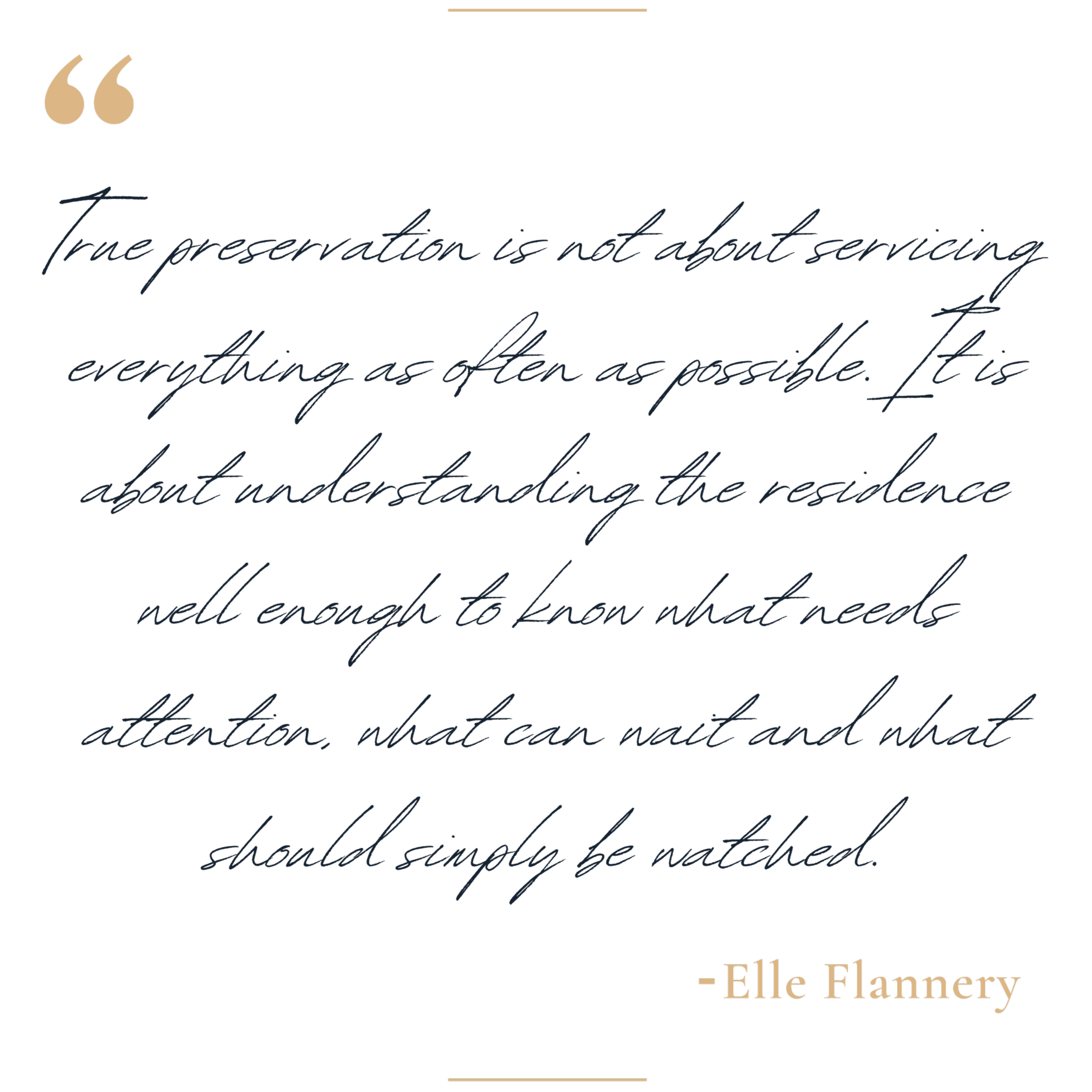
True preservation is not about servicing everything as often as possible. It is about understanding the residence well enough to know what needs attention, what can wait and what should simply be watched.
For coastal homeowners, that can mean fewer unnecessary service calls, better protection of specialty materials and a maintenance budget directed toward the things that genuinely matter.
Sometimes the best way to care for a home is not to do more.
It is to know precisely when something actually needs to be done.
The Estate Journal
Continue Reading
NEXT IN THE ESTATE JOURNAL

PREVIOUS IN THE ESTATE JOURNAL

Your home may not need more maintenance.
It may just need better oversight.
Coastal Peace of Mind helps homeowners identify what truly requires attention, what can wait and where preventative care matters most—so the residence is protected without unnecessary service or expense.