

ESTATE JOURNAL
The Difference Between Property Management and Private Estate Management

Why maintaining a residence is not the same as managing an estate.
By Elle Flannery | Coastal Peace of Mind ou may have a property manager,

a housekeeper and an excellent list of vendors, yet still find yourself coordinating access, approving repairs and explaining how the home should be cared for. Property management keeps the residence functioning. Private estate management protects every surface, supervises every person and brings the entire operation under one trusted point of accountability.
One manages a property. The other manages everything required for the property to feel effortless.
The terms property management and private estate management are often used interchangeably. Usually by someone who has never arrived at a second home to find the air conditioning unresponsive, the refrigerator empty and three vendors waiting for instructions. Both services involve caring for a residence. That is where the similarity begins and, in many cases, ends.
Property management is generally concerned with the building: maintenance requests, vendor coordination, inspections and sometimes leasing or tenant relations.
Private estate management is concerned with the owner’s entire experience of the home. It considers the residence, household staff, service providers, vehicles, inventories, ongoing projects and the countless details that determine whether ownership feels seamless or strangely similar to having another job.
The distinction is not simply one of luxury. It is one of responsibility.
Property Management Responds to the Property
Traditional property management is often structured around identifiable tasks. A repair is reported. A vendor is contacted. An estimate is approved and the work is scheduled. The process is practical and transactional. For rental properties, investment properties and less complex residences, that may be exactly what is required.
A private home, however, does not always present its needs in the form of a convenient maintenance request. No one submits a ticket when the exterior hardware begins corroding. The wine refrigerator does not explain that it has been running inconsistently. The irrigation system does not mention that one section has quietly shifted toward the foundation. These details must be noticed.
That requires familiarity with the property, consistent observation and someone who understands what has changed since the last visit. Private estate management does not wait for the residence to make a formal complaint.
Estate Management Begins Before Something Goes Wrong
The most valuable work in a private home is often completed before the owner is aware that it was needed. Mechanical systems are serviced before the season changes. Exterior materials are reviewed before coastal exposure becomes visible damage. Vendors are scheduled, supervised and held accountable before the owner receives an invoice.
A true estate manager also maintains a detailed estate calendar that tracks recurring preventative maintenance and seasonal care throughout the year. HVAC servicing, roof and gutter inspections, stone sealing, irrigation reviews, generator testing, pest control and exterior maintenance are scheduled in advance rather than left to memory or addressed only when something fails.
The calendar creates continuity. It records what was completed, what is approaching and which recommendations require follow-through. The homeowner does not need to remember when the water filtration system was last serviced or whether the exterior hardware should be inspected before another coastal winter. Someone is already watching the timeline.
The objective is not to eliminate every possible problem. Homes remain homes and occasionally choose chaos. The objective is to identify vulnerabilities early, manage them intelligently and prevent small concerns from becoming expensive interruptions.
Property management often asks:
What needs to be repaired?
Private estate management asks:
What needs attention now so it does not require repair later?
That difference can determine whether the owner approves routine maintenance or returns home to a restoration project.
A True Estate Manager Understands the Materials
A beautifully appointed home cannot be cared for with a bottle labeled “all-purpose.”
A true estate manager understands the materials throughout the residence and the rules that protect them. They know that marble and limestone should never meet acidic cleaners. They know which surfaces require a pH-neutral product, which finishes need periodic sealing and which materials should not be treated until the fabricator’s specifications have been reviewed.
They know the difference between cleaning something and caring for it correctly. That distinction matters when the home includes natural stone, custom millwork, lacquered cabinetry, specialty metals, hand-finished plaster and flooring that cannot simply be replaced from a catalog.
The estate manager ensures that household staff understand those differences too. Housekeepers are trained not to drag equipment across flooring, scuff baseboards or use an unsuitable product because it happens to smell reassuringly clean. Fingerprints are removed from light switches. Cabinet fronts are checked at eye level. Corners, thresholds and trim are examined for the small signs of wear that are easy to miss until they are no longer small.
These details may appear minor. They are also the difference between maintaining an exceptional home and slowly diminishing it.
Vendors Must Be Managed Inside the Home
A vendor may be highly skilled in their trade and still have no idea how to move through a private estate. An estate manager anticipates this.
They require booties where appropriate and protective runners across vulnerable flooring. Corners, walls and furnishings are shielded before equipment is brought inside. Work areas are contained and the route from the entrance to the project is considered before the first toolbox crosses the threshold.
Exterior areas require the same attention. A contractor who parks leaking equipment on a porous cobblestone driveway can leave an oil stain that penetrates the material. In some cases, the affected stone cannot be restored to the standard of the surrounding surface and replacement becomes the only acceptable correction. The time to prevent that damage is before the vehicle arrives.
A true estate manager does not assume a vendor will automatically understand the standards of the home. They communicate those standards, remain present when necessary and inspect the property after the work is complete. The repair should resolve one problem. It should not create three new ones on the way out.
A Private Estate Is More Than Its Physical Structure
A sophisticated residence is not simply a collection of rooms and systems. It may include household staff, specialty finishes, valuable furnishings, extensive landscaping, vehicles, pets and several recurring service providers. It may also include a second residence, a yacht or a calendar of guests whose arrival was apparently confidential until forty-eight hours beforehand. Each element affects the others.
A contractor’s work may alter the housekeeper’s schedule. A staffing change may affect security and access. A delayed appliance repair may influence an upcoming event. A vendor may complete the technical assignment while leaving the surrounding area dusty, unsecured or entirely unprepared for the owner’s return.
Property management may coordinate the service. Estate management oversees how the service fits into the operation of the household. That broader perspective is where continuity begins.
Vendor Coordination Is Only One Piece
Having a list of reliable vendors is useful. Knowing when to use them, how to direct them and whether their work meets the standard of the residence is considerably more valuable.
A private estate manager does not simply provide access and wait for the invoice. They clarify the scope, compare recommendations and monitor progress. They protect surrounding finishes, document the work and confirm that the issue has been resolved rather than temporarily quieted. They also understand that the least expensive estimate may not represent the lowest long-term cost and the most enthusiastic recommendation may not be the most necessary.
A vendor is responsible for their trade. An estate manager is responsible for how that trade affects the home. Without that oversight, the homeowner often becomes the person comparing proposals, resolving conflicting opinions and trying to determine why a straightforward repair now involves four subcontractors and a change order.
This is not the best use of anyone’s vacation.
Estate Management Includes the People Inside the Home
A well-run household depends as much on people as it does on property. Housekeepers, personal assistants, chefs, estate managers, caregivers and other household professionals each need clear responsibilities and consistent communication. Even an excellent employee can struggle in a home where expectations have never been defined.
Private estate management may include recruiting household staff, establishing procedures and supporting daily operations. It creates clarity around schedules, service standards, confidentiality and decision-making authority. It also gives staff one informed point of leadership.
That leadership extends to the smallest standards: how linens are handled, how rooms are reset and how surfaces are inspected after cleaning. The goal is not simply that the house looks clean from the doorway. It is that nothing has been damaged in the process and no detail has been left for the owner to notice later. Without that structure, the homeowner often becomes the intermediary between employees who are individually capable but operationally disconnected.
One person changes the schedule. Another does not receive the update. A vendor arrives while the home is being prepared for guests and the owner receives six messages about an issue that could have been settled in one conversation.
Good household management is not about creating rigidity.
It is about ensuring that everyone understands what a beautifully run home requires.
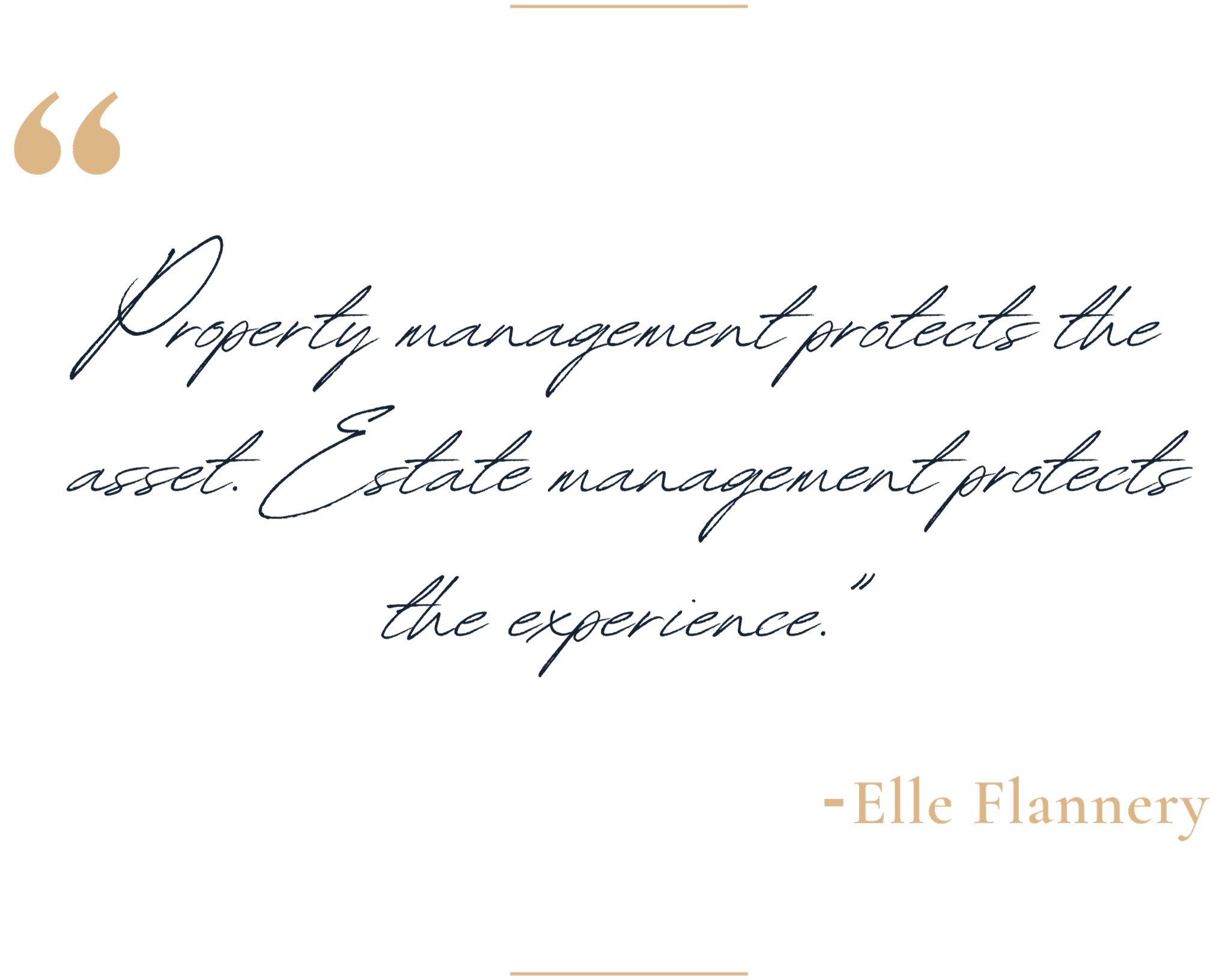
Property Management Protects the Asset. Estate Management Protects the Experience.
Both forms of management should protect the physical residence. Private estate management goes further by protecting the owner’s time, privacy and ability to enjoy the home. That may mean preparing the residence before arrival, arranging preferred groceries and confirming that lighting, climate and technology are functioning properly. It may mean securing the home after departure, overseeing a project while the owner is away or quietly resolving an issue before it affects a family weekend.
It also means noticing what others overlook. A fingerprint on a switch plate. A faint mark along a baseboard. A chair returned to the wrong room. A service door left unsecured. A custom surface cleaned with the wrong product once and permanently altered. These details can appear small when considered individually. Together, they determine how the home feels and how well it will age.
A residence can be technically maintained and still feel poorly managed. The landscaping may be serviced, the pool may be clean and the invoices may be paid. Yet the owner may still be coordinating access, answering vendor questions and reminding someone that guests are arriving. The property is being maintained. The homeowner is still managing it.
Reporting Is Not the Same as Reassurance
Many management services provide updates. Private estate management provides context. There is a meaningful difference between receiving a photograph of a problem and receiving a clear recommendation.
A report might say:
“There appears to be moisture beneath the upstairs sink. Please advise.”
An estate manager should be able to say:
“Moisture was discovered beneath the upstairs sink during today’s inspection. The supply valve has been secured, the surrounding cabinetry is dry and our preferred plumber is available tomorrow morning. I recommend proceeding under the existing authorization limit.”
The first message transfers the problem to the homeowner. The second demonstrates that someone capable is already managing it. The goal is not to withhold information. It is to prevent the owner from becoming responsible for every operational decision simply because they own the residence.
The Right Service Depends on the Home
Not every residence requires private estate management. A relatively straightforward property with limited systems, few vendors and no household staff may be well served by conventional property management or scheduled home-watch visits.
The need changes when the residence becomes more complex, the owner is frequently away or several people are involved in maintaining the home. It becomes particularly valuable when the homeowner notices that they are still coordinating vendors, checking whether work was completed, managing household employees, preparing the home before every arrival or resolving preventable problems from another city.
At that point, the missing service is not additional maintenance.
It is leadership.
A Well-Managed Estate Should Feel Quiet
The clearest distinction between property management and private estate management is not found in a service list. It is found in the owner’s experience.
Property management helps keep a building functioning.
Private estate management creates continuity across the property, the people who support it and the life taking place within it. The best estate management is discreet, anticipatory and exacting. It does not create more activity around the homeowner. It absorbs the activity already surrounding the home and gives it order.
The vendors know where to report. The staff understand what is expected. The maintenance is documented. The stone is cared for correctly. The flooring is protected and the residence is ready when the owner arrives. No emergency group chat required.
A property can be maintained by many people.
An estate is truly managed when one trusted professional is accountable for every detail.
The Estate Journal
Continue Reading
NEXT IN THE ESTATE JOURNAL

PREVIOUS IN THE ESTATE JOURNAL


Your residence deserves more than maintenance.
Coastal Peace of Mind provides private estate management that brings the property, household staff and service providers under one trusted point of accountability—protecting the home while giving you back your time.